
 Feb 13, 2026
 0 Comments
# 🚀 Workflow Automation & System Integration Explained
### How Enterprise Integration Powers Digital Transformation
## Introduction
In today’s digital landscape, businesses rely on multiple systems — ERP, CRM, HR, finance, marketing automation, cybersecurity platforms, and data management tools. However, without proper **system integration**, these platforms operate in silos, leading to data inconsistencies, reduced operational efficiency, and increased security risks.
This is where **workflow automation and enterprise system integration** become essential. Organizations that successfully implement integration strategies unlock seamless data exchange, real-time visibility, and scalable digital transformation.
---
# What is System Integration?
**System integration** is the process of connecting multiple software applications so they operate as one unified digital ecosystem.
Instead of isolated tools, businesses create connected environments where data flows securely and automatically between systems.
### Types of System Integration
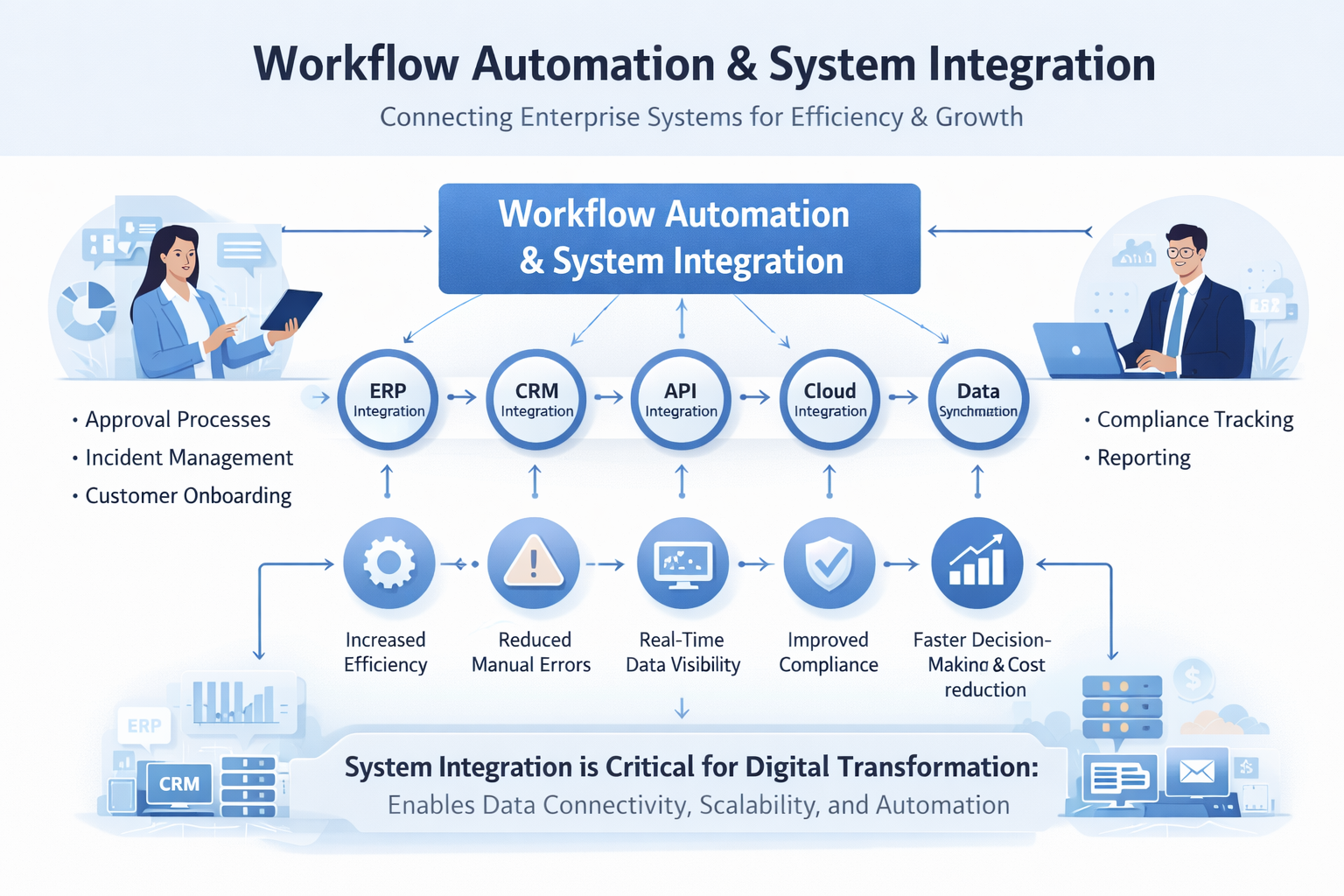
Modern enterprise integration includes:
* **API integration services**
* **ERP integration**
* **CRM integration**
* **Cloud system integration**
* **Database synchronization**
* **Enterprise automation solutions**
Today’s enterprises depend heavily on **API-based integrations** to enable secure, real-time communication between applications, whether hosted on-premise or in the cloud.
Without API integration, organizations face delays, duplicated data, and compliance challenges.
---
# What is Workflow Automation?
**Workflow automation** uses predefined rules, triggers, and logic to automate repetitive business processes.
Instead of manual intervention, automated workflows handle:
* Approval workflows
* Incident response processes
* Customer onboarding automation
* Compliance tracking
* Risk management reporting
* Data validation processes
Through business process automation, companies reduce operational overhead while improving accuracy and response time.
Integration gateways, middleware platforms, and automation engines serve as the backbone of modern enterprise automation.
---
# The Strategic Benefits of Workflow Automation & System Integration
Organizations that implement workflow automation and system integration experience measurable improvements:
### 1️⃣ Increased Operational Efficiency
Automated processes reduce manual workload and improve productivity.
### 2️⃣ Reduced Human Errors
System synchronization minimizes data duplication and inconsistencies.
### 3️⃣ Real-Time Data Visibility
Connected systems allow executives to access centralized dashboards with accurate reporting.
### 4️⃣ Improved Compliance & Governance
Integrated systems simplify audit trails, regulatory reporting, and compliance management.
### 5️⃣ Faster Decision-Making
Real-time analytics empower leadership with actionable insights.
### 6️⃣ Cost Reduction
Automation reduces administrative costs and resource waste.
---
# Common Enterprise Integration Examples
Enterprise environments frequently require integration between critical platforms such as:
* Jira ↔ RSA Archer integration
* ERP ↔ Accounting systems
* CRM ↔ Marketing automation tools
* Database ↔ Business Intelligence dashboards
* eCommerce ↔ Payment gateway integration
* HR systems ↔ Payroll platforms
These integrations eliminate manual data transfers and create seamless enterprise workflows.
---
# Why System Integration is Critical for Digital Transformation
Digital transformation is not just about adopting new software — it’s about connecting existing systems into a cohesive ecosystem.
Without enterprise integration:
* Data silos increase
* Security risks rise
* Reporting becomes unreliable
* Operational delays grow
* Compliance exposure expands
**Enterprise system integration enables scalable growth, secure automation, and intelligent decision-making.**
Businesses that invest in API integration and workflow automation position themselves for long-term success in competitive digital markets.
---
# How System Solve IT Supports Enterprise Integration
At **System Solve IT**, we specialize in:
* Custom API integration services
* Enterprise workflow automation
* ERP and CRM integration
* Secure system architecture design
* Cloud and hybrid integration solutions
* Compliance-driven automation frameworks
Our goal is to help businesses achieve seamless system connectivity while maintaining security, scalability, and regulatory compliance.
---
# Conclusion
Workflow automation and system integration are no longer optional — they are foundational to modern enterprise operations.
Organizations that connect their systems effectively reduce risk, improve performance, and accelerate digital transformation initiatives.
If your systems are operating in silos, now is the time to implement a structured enterprise integration strategy.
---
workflow automation, enterprise system integration, API integration, digital transformation, ERP integration services, CRM integration, business automation, enterprise software solutions
Workflow Automation & System Integration Explained
Learn how workflow automation and system integration improve business efficiency. Discover API integration, ERP integration, and enterprise automation strategies for digital transformation.


Share Your Perspective
Join the discussion. Your email will remain private. Required fields are marked *
Reader Comments (0)